
Neha changes jobs and assumes her employer’s health policy will continue until the new job starts. The actual end date depends on the group policy and employer arrangements. A job change can leave an avoidable gap if she does not check.
What employer cover can do well
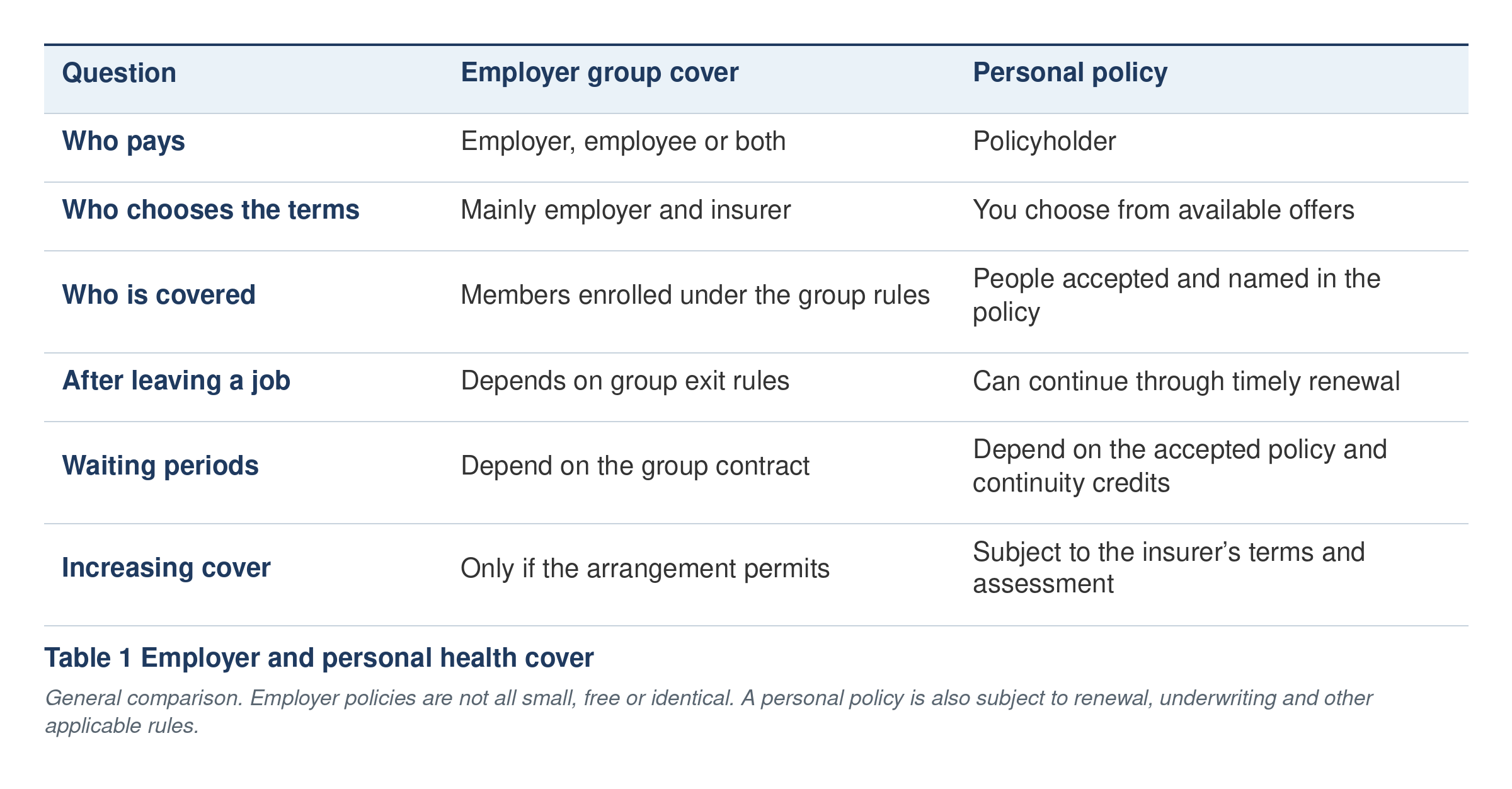
An employer may pay all or part of the premium and negotiate useful benefits. Some group policies cover pre-existing illnesses or maternity with shorter waits than a personal policy. Others do not. Read the employee benefit summary.
Check who is enrolled. A spouse, child or parent may require a separate election or an employee contribution. Do not assume the entire family is automatically covered.
Where the gaps can arise
The employer chooses the basic insurer and terms, though voluntary top-ups may be available. The sum insured, room eligibility, exclusions or co-pay may not match your family’s needs.
Cover may end when employment ends or on another date set by the arrangement. Retirement, leave without pay or a change in the employer’s benefits can also affect protection. Ask HR for the exact rule in writing.
 Keep continuity in mind
Buying personal cover while you are employed can let waiting periods run before you depend on it fully. It can be useful even when the employer policy is currently generous. Choose an affordable amount and review both covers together.
Migration means moving to another policy with the same insurer. Group members can seek migration to available personal cover with applicable continuity credits. Acceptance and underwriting conditions matter; it is not an automatic transfer to any policy you choose.
Ask the insurer and HR about migration well before leaving. Obtain the accepted start date, premium and credited periods in writing. Do not wait until the old cover has already ended.
If you have both policies
Eligible medical expenses can be coordinated across policies that reimburse treatment costs, but you cannot recover more than the eligible actual expense. Tell the insurer about the other cover and keep claim records.
A super top-up may add a layer, but its deductible still needs funding if employer cover stops. Having another policy does not erase the top-up’s own waiting periods or exclusions.
Use employer cover as part of your protection. Make sure a change of job will not unexpectedly remove the cover you rely on.