
A job loss or an urgent repair can leave you needing money before the next salary. An emergency fund is money kept for unexpected, necessary costs. It helps you avoid expensive borrowing or selling investments at a bad time.
Work out the amount
Start with essential monthly expenses: rent, food, bills, necessary travel, insurance premiums and loan instalments, or EMIs. Include dependants’ needs. Leave out spending you could reasonably pause if your income stopped.
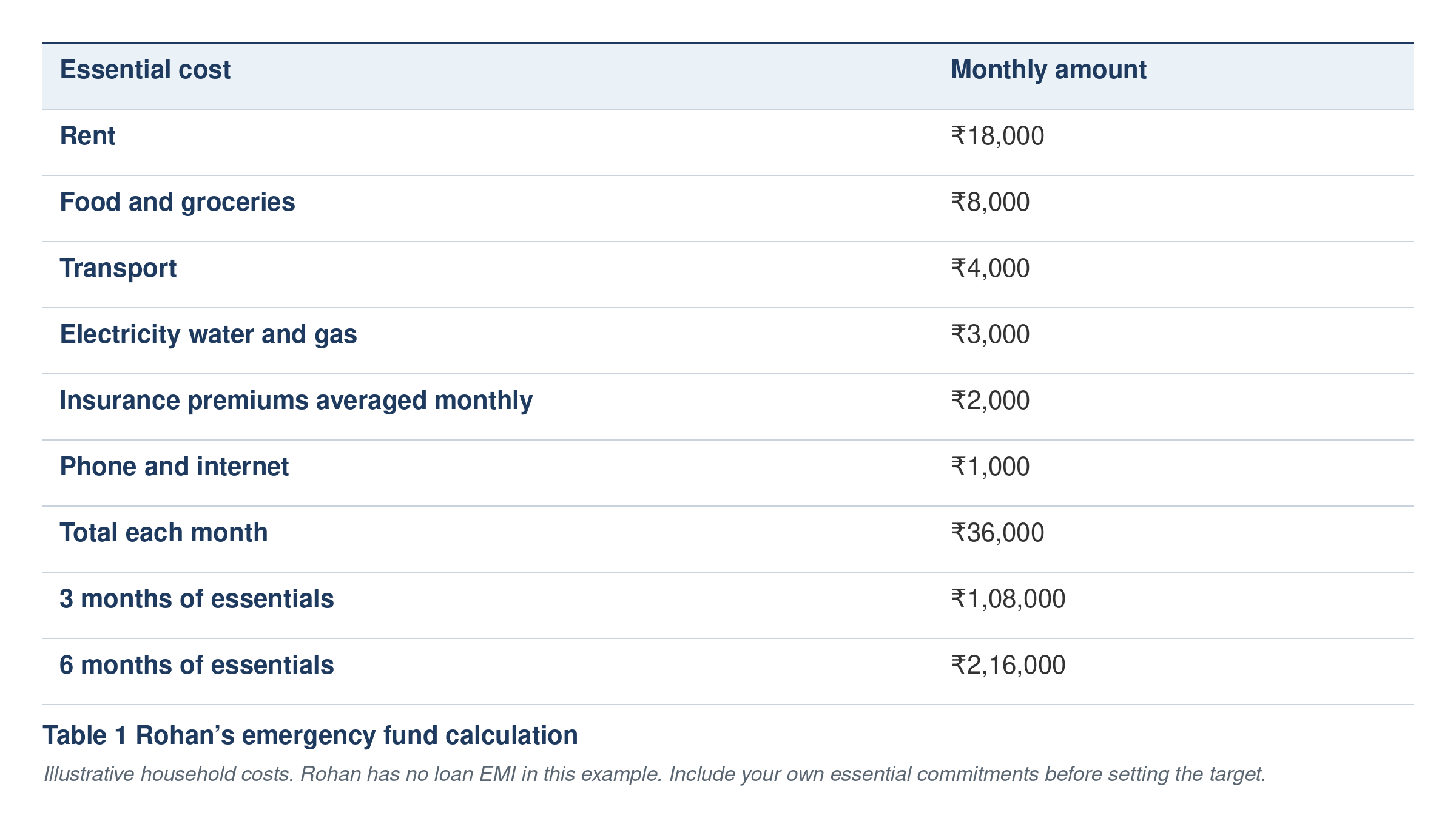 Three to six months of essentials is a starting guide, not a fixed requirement. Variable income, a single earner or substantial family needs may call for more. If the full target feels distant, build one month first and add to it regularly.
Choose access and safety
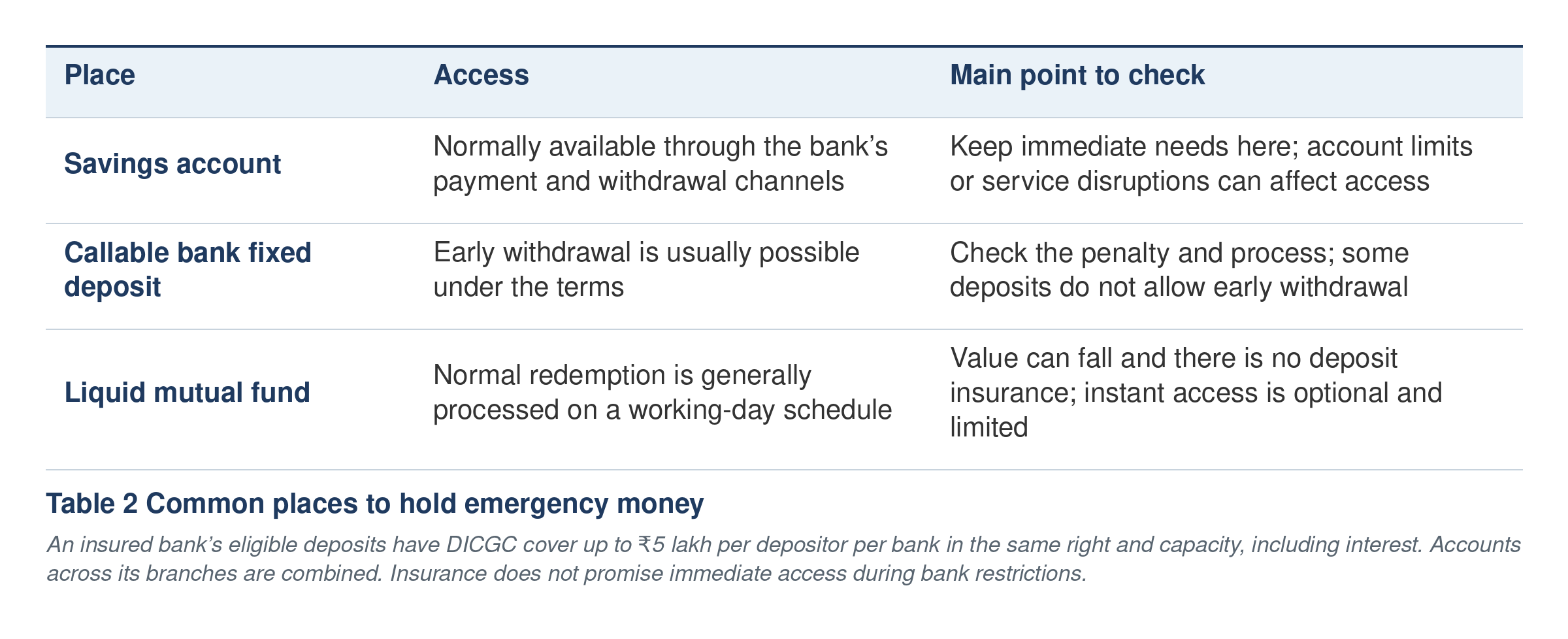 A liquid fund holds debt and money-market instruments with maturities up to 91 days. It still has investment risks. Where offered, instant access for eligible resident individuals is generally limited to ₹50,000 or 90% of the holding value, whichever is lower, subject to scheme conditions. Do not rely on it for every urgent payment.
Build and maintain it
You could keep immediate needs in a savings account and the remainder in suitable accessible deposits or other low-risk options you understand. Health insurance covers eligible treatment costs; emergency cash helps with gaps and interruptions in income.
Returns are secondary to availability. If ₹2.16 lakh earns an assumed 2.5% for a year, it becomes ₹2,21,400 before tax. If essential costs rise by an assumed 5%, the target becomes ₹2,26,800, leaving a ₹5,400 gap. Review the target as costs change, and refill the fund after use.