
Asha and Ravi each invest ₹10,000 only once and leave it invested until age 60. Asha invests at 25. Ravi invests at 35. They invest the same amount, but Asha gives her money ten more years to grow.
How much difference could those years make? Let’s work through an example.
What compounding means
Compounding happens when returns stay invested and begin earning returns themselves. Suppose ₹10,000 grows by 10% each year. After one year, it becomes ₹11,000. In the second year, 10% of ₹11,000 is ₹1,100, so the balance reaches ₹12,100. The next year’s gain is ₹1,210.
The percentage stays the same in this example, but it applies to a growing amount. In real investments, returns can change and losses can reduce the amount available to grow.
Asha’s money over time
Assume Asha invests ₹10,000 once at age 25 and earns 12% a year, compounded annually. She adds no more money and leaves all returns invested. We leave out taxes and costs. This is an illustration, not a forecast
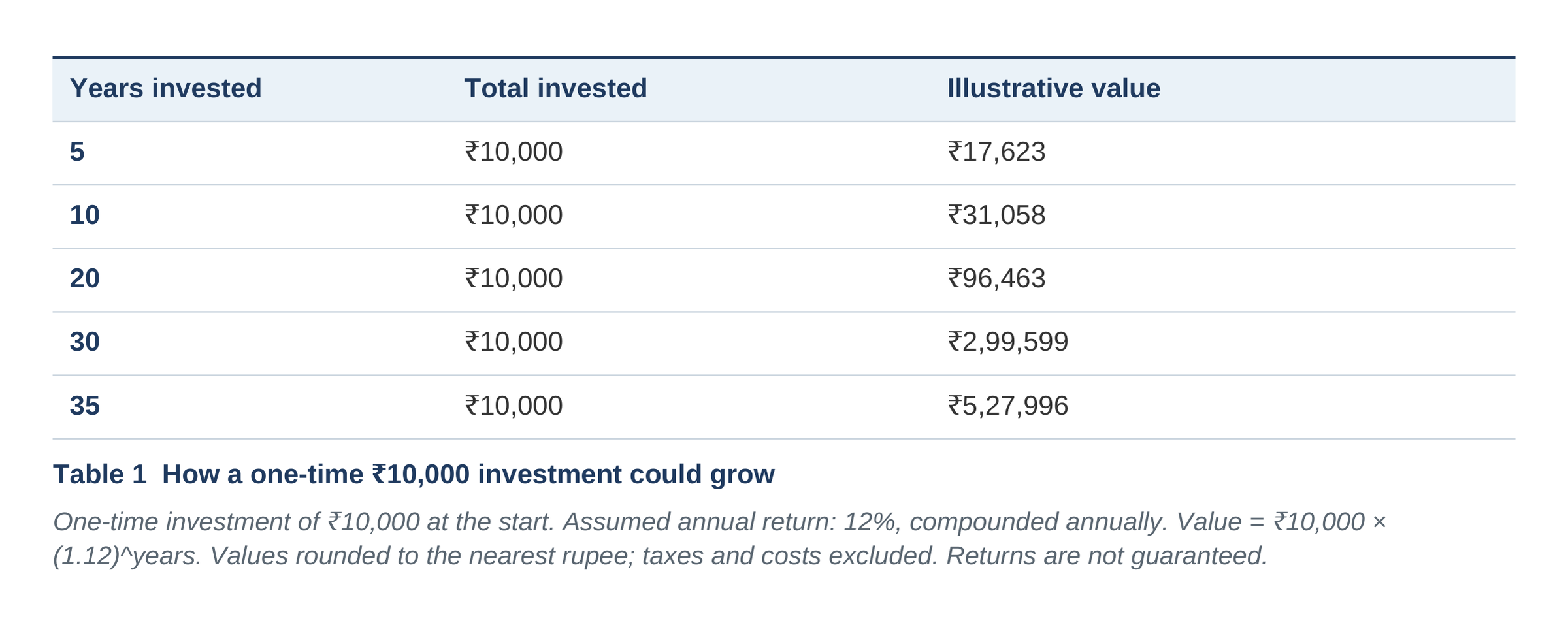 During the final five years, the value rises by about ₹2.28 lakh, even though Asha adds no more money. That increase comes entirely from growth on the balance already built. Actual markets will not follow this smooth path.
Now compare Asha and Ravi
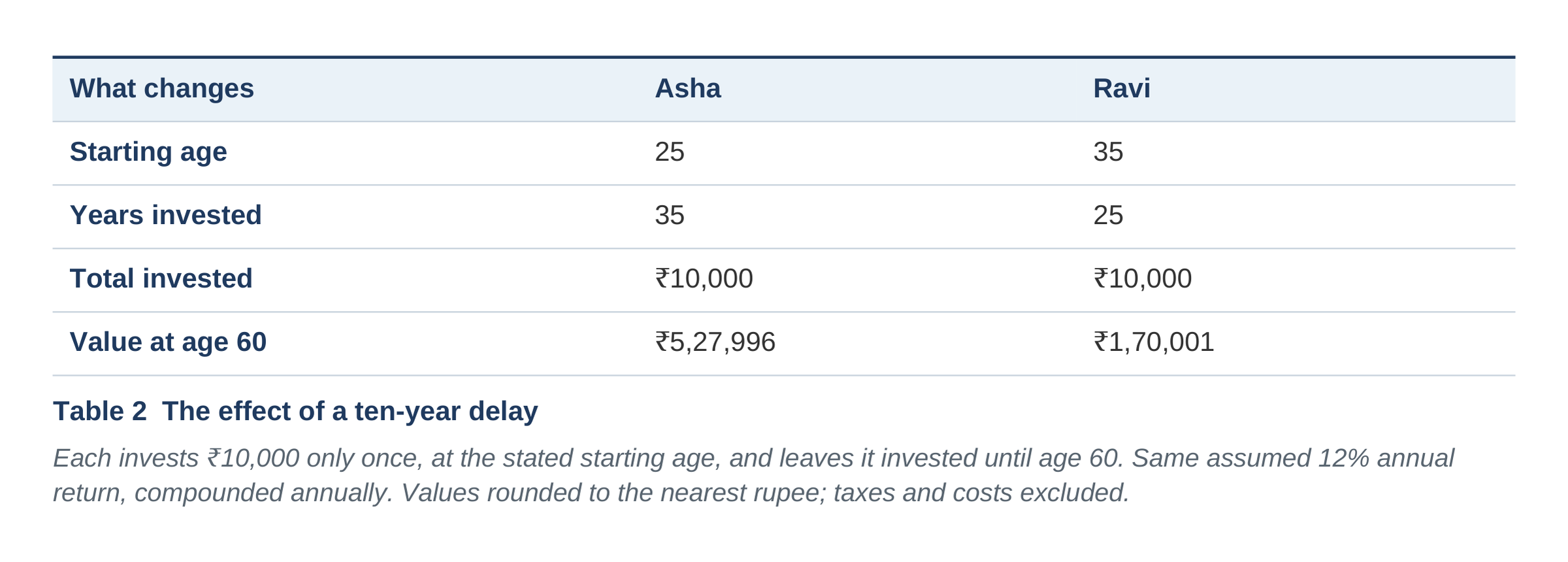 In this example, both invest exactly ₹10,000, but Ravi finishes about ₹3.58 lakh behind. Asha’s investment had ten more years to grow. The size of this gap depends heavily on the return assumed. These are future rupee amounts, not their value in today’s buying power.
What if Ravi wants to catch up
Under these same assumptions, Ravi would need to invest about ₹31,058 once at age 35 and leave it invested for 25 years to reach Asha’s final amount. Starting later can mean investing more, accepting a smaller goal or allowing more time.
What to take from the example
Time helps, but the investment, return, costs and amount invested matter too. Compounding cannot turn a poor investment into a good one. Share prices can fall, and reinvesting does not guarantee a profit.
Start with an amount you can afford to leave invested, and keep suitable returns invested. You can add more money later if possible, but this example assumes no additions. If you are starting later, focus on what you can do now rather than taking extra risk to make up for lost time.