
Two friends invest in the same mutual fund scheme for 20 years. They choose the same option, with the same portfolio and manager, but one uses a direct plan and the other a regular plan. The difference in costs can leave them with different final amounts.
Same scheme and different buying routes
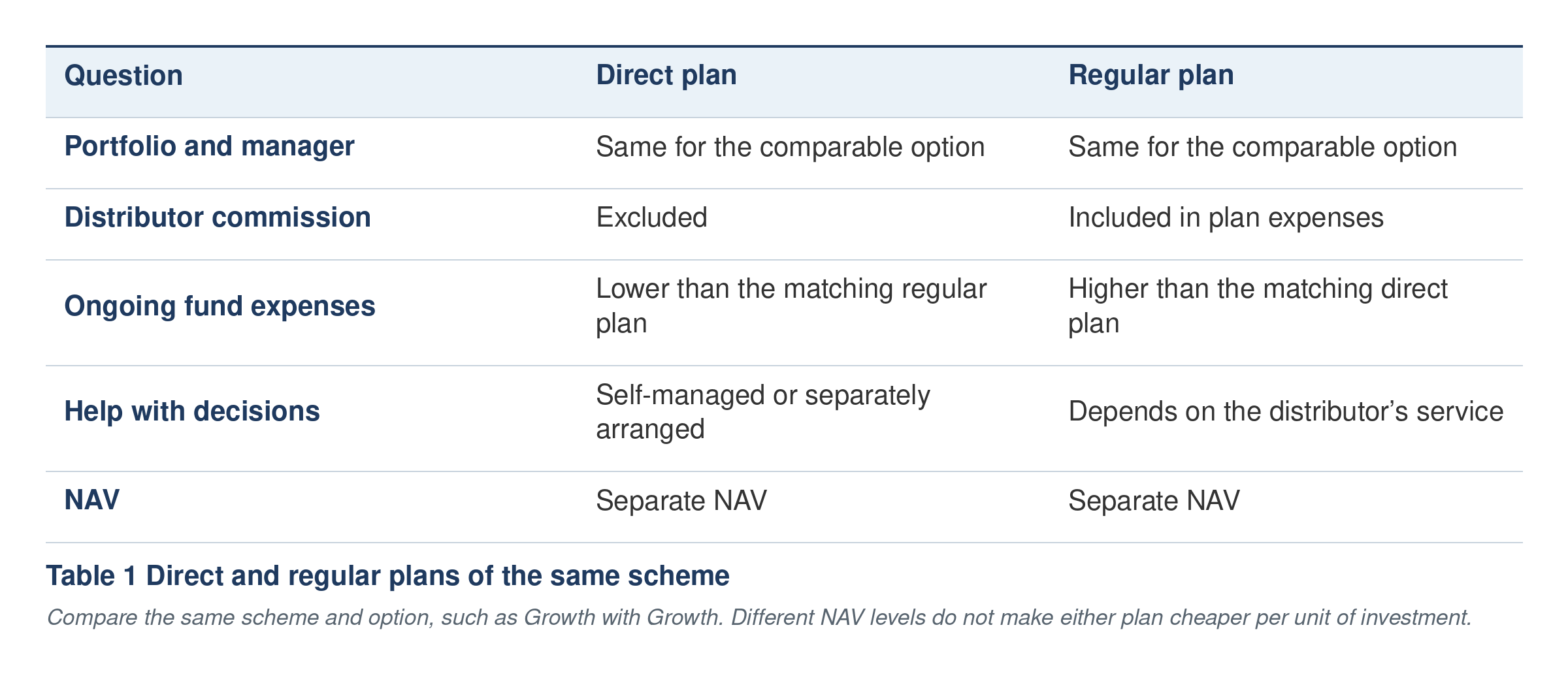
Many mutual fund schemes offer direct and regular plans. A direct plan excludes distributor commission. You can buy it through the fund house or a platform offering direct plans. A platform or adviser may charge you separately, so check its fees too.
A regular plan is bought through a distributor, such as a bank, agent or distribution platform. The fund pays distribution commission from the regular plan’s expenses. The help provided can vary.
 Where the cost appears
An expense ratio is an annual cost expressed as a percentage of the money managed. Expenses reduce the fund’s value over time, so the published NAV, or Net Asset Value per unit, already reflects them.
You normally do not receive a separate bill for distribution commission. Instead, a higher ongoing cost leaves less money invested. The size of the gap varies across schemes and can change.
An example over 20 years
Assume ₹10,000 is invested at each month-end. Both plans earn 12% a year before costs. For a simple model, subtract annual costs of 1.00% and 1.75%, then convert the resulting annual returns to matching monthly rates.
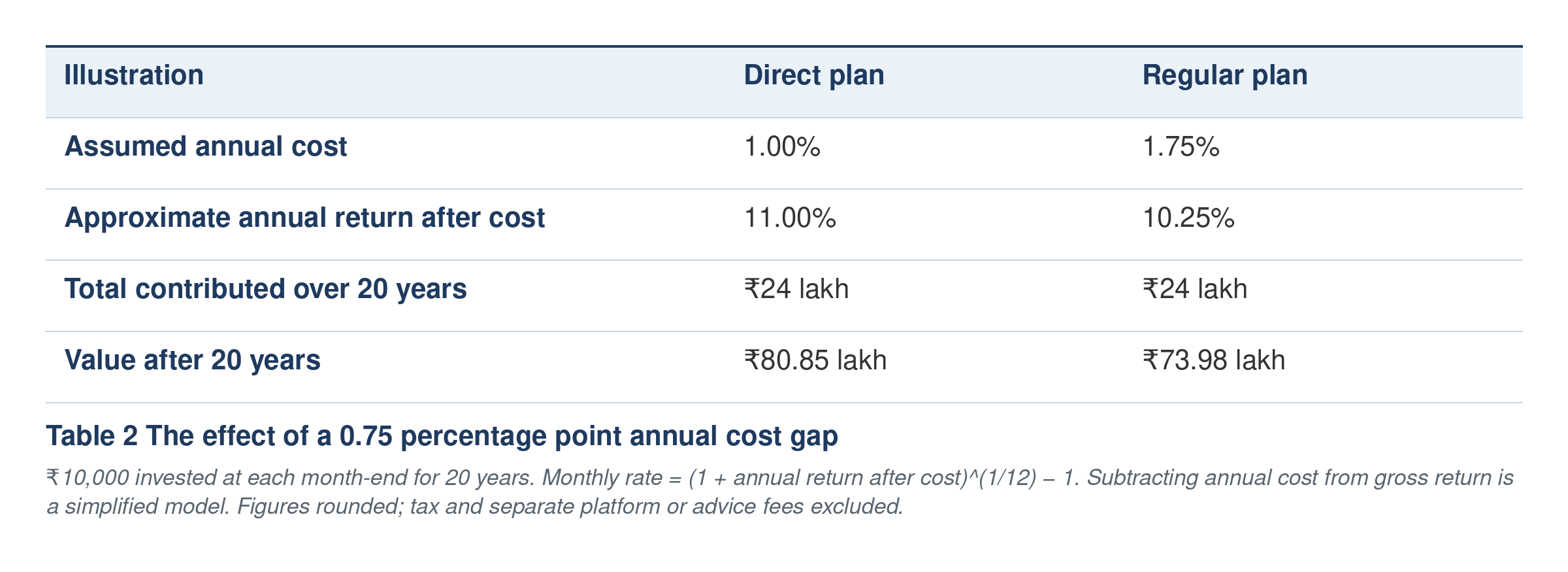 The difference is about ₹6.88 lakh, calculated before rounding the final values. The higher cost reduces both the current balance and the amount available to earn future returns. Actual market returns will vary.
What the regular plan pays for
A distributor may help with paperwork, fund selection and ongoing service. Judge the actual support and its value to you. A distributor’s commission-based role differs from that of a SEBI-registered investment adviser providing advice under an agreed fee arrangement.
Before changing plans
Check the full plan name on your statement. Do not judge it by the NAV level. A switch from regular to direct is generally treated as a redemption and fresh purchase, so capital-gains tax and any applicable exit load may arise.
Choose the buying route with a clear understanding of its cost, service and your ability to manage the investment. A lower cost helps, but it does not make an unsuitable scheme suitable.