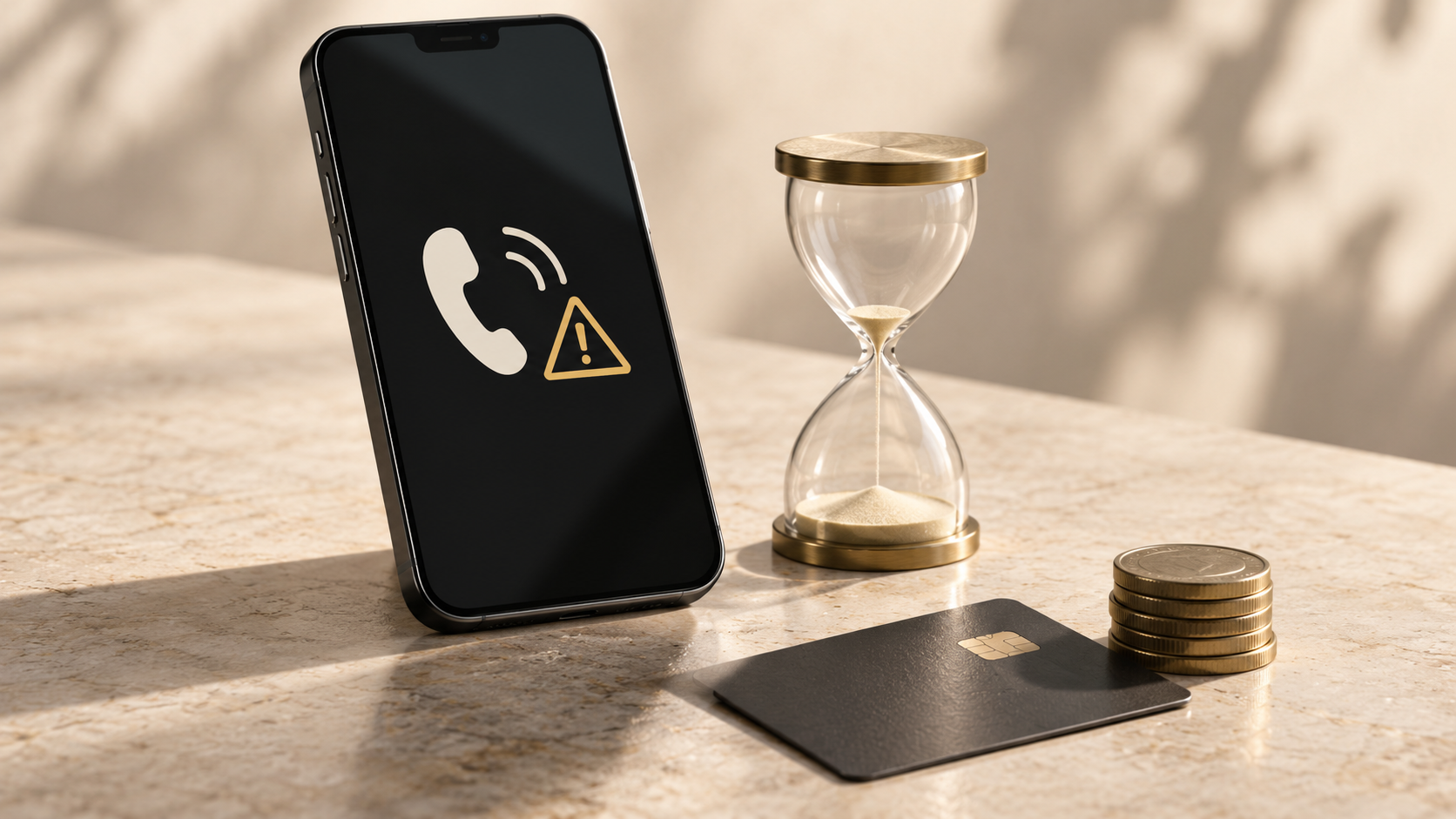
The scam
Imagine getting a call saying your bank account will be blocked in ten minutes. Or that the police are about to arrest you. The caller sounds serious and tells you to act now. When you are frightened, sharing an OTP or sending money can start to feel like the only way out. That is how the scam works: the emergency may not be real at all.
Warning signs
• You are told something terrible will happen unless you act immediately.
• The caller gets angry or threatening when you ask questions.
• You are told to stay on the call instead of checking for yourself.
• The conversation quickly turns to money, passwords or OTPs.
Stop and verify
End the call. Contact your bank or the organisation using its official app, website or a number you already trust. Do not use the phone number or link the caller gives you.
If you have already acted
• Stop sending money or sharing information.
• If you shared a password, OTP or card details, inform your bank right away. Ask what needs to be blocked or changed.
• Keep the number, messages and any transaction details.
• If money was lost, report it to your bank, call 1930 and file a complaint at cybercrime.gov.in.